Tuesday, November 6, 2018

Restorative Practice and Circles Training at Helix Charter High School

Our team had the opportunity to attend a Restorative Practice and Circles Training held by the San Diego County Office of Education (SDCOE) on Monday, September 10, 2018. The four presenters were Anthony Ceja (SDCOE), Phillip Lumula (GUHSD), Marc Barlow (GUHSD), and Ashley McGuire (IIRP Consultant). The materials were provided by the International Institute for Restorative Practices (IIRP). What is normally a two-day training was condensed into a one-day professional development at Helix Charter High School. The professional development was brought to Helix with the intent to reinforce and increase the awareness of students' social-emotional needs while also providing tools and strategies to consider implementing.

We decided to participate in this professional development because we were interested in learning more about the implementation of restorative practices in the context of the high school setting.

Theoretical Foundation

Restorative practices have roots in ancient indigenous traditions found all over the world. In our modern society the practice has been defined as a collaborative process called conferencing. Family Group Conferencing (FGC) and Family Group Decision Making (FGDM) are two forms of counseling that use similar circles and principles. Theoretically, circles are a form of small group interventions intended to resolve conflict and build community.

Evidence-Based Practice

Organizations and individuals in fields such as education, social work, counseling, and criminal justice are combining theory, research and practice to develop restorative models that will measure positive outcomes. In education, circles and groups provide opportunities for students to share their feelings, build relationships and solve problems, and when there is wrongdoing, to play an active role in addressing the wrong and making things right (Riestenberg, 2002).

Counseling Intervention Techniques and Considerations

Restorative practices and circles can be incorporated into counseling techniques, which could be used preventatively or as a response to disruptive behavior and crisis. Teachers can use restorative circles to build relationships, trust, and an open environment among students within the classroom. Restorative practices can be used routinely, for example in the beginning of every class or at the end of every week, or as needed (such as one-on-one with a student who has broken class rules). We have observed Helix administrators utilize restorative questions when addressing student behavioral referrals. We have also observed Helix school counselors utilize restorative circles as a form of conflict mediation between students and among staff.

The training at Helix was geared towards all high school level students. The training was presented from the lens that students are expected to be at a developmental level where they can become aware of their behavior and the consequences it may have on others. Restorative practices welcomes all backgrounds because they are inclusive and allow all who are present to contribute to the conversation.

Although the training was focused on supporting older students, this practice is versatile. At the heart of restorative practices, it is seeking to understand rather than provide punitive punishment or one-sided leadership. One context restorative practices can be used in is with the entire class. In this form, a teacher or facilitator may use a restorative circle to allow students to take the lead in understanding a topic or resolving a large-scale issue. Another form it can take is in small group or individual conversations with a school counselor to acknowledge harm caused and rebuild trust that may have been lost.

A consideration a counselor must take into account is the severity of the conflict before implementing a restorative circle. For example, if the event is of a violent or abusive nature, other disciplinary measures could be considered. However, this does not mean that the healing power of a restorative circle cannot be used concurrently. Some circles may require an extensive amount of time to ensure that everyone has a chance to participate. Thus, one must be attentive of any time restrictions and number of participants. Lastly, we must educate our faculty and students on the philosophy, practice, and purpose of the group to encourage full buy-in and participation.

As future school counselors, we can incorporate this technique into our counseling practice by using restorative questions, which is one of the tools provided by SDCOE and IIRP. This tool is a small card that is double-sided. One side has questions to ask those who have caused harm and the other side includes questions to ask those who have been affected. This is a simple way to get in the habit of thinking in a restorative mindset. It does not take very long yet it allows students to feel heard and authority figures to better understand their students and the context of the situation.

Measuring Effectiveness

Both qualitative and quantitative methods could be used to measure outcomes. The restorative practices can be measured through the level of cohesion of a class or student perceived sense of safety through school-wide data, such as California Healthy Kids Survey (CHKS). This is difficult to directly measure, but can be observed through interactions and a rising level of mutual support and individual initiative. It can also be measured through tracking the decrease of student referrals and the decrease in repeating offenders.

Additional Resources

Defining Restorative Article


Natalie Kutches, Melanie Lim, Juan Ugarte, & Jay Villafuerte
SDSU School Counseling Interns


Saturday, October 27, 2018

CASC Conference 2018: Think Before You Click: Jordan’s Law & Cyberbullying Education

The professional development growth opportunity I’d like to focus on is a session I attended at the CASC Conference on Thursday, October 18, 2018, called Think Before You Click: Jordan’s Law & Cyberbullying Education. This session was led by Ila Laguercia, a School Counselor at Simi Valley High School, and Ed Peisner, the founder of The Organization for Social Media Safety. Ed created this organization after his son was assaulted, and the attack was recorded by multiple bystanders and uploaded to social media by a friend of the attacker.


Having previously worked in social media marketing, I am very aware of how manipulative various online platforms can be and the negative effect they can have on users. Though my work was more focused on paid marketing through Facebook and Instagram, during my time researching best practices and strategies for effectively marketing, I often stumbled upon articles linking social media to depression and anxiety. My understanding of the effect that social media can have on people was compounded by my experience at my practicum site last year, where several students were bullied through an Instagram account in which students submitted gossip and secrets through private messages, all to be shared publicly through posts and stories. I realized that if kids were already experiencing this in sixth grade, it was worse than I even thought, and this presentation confirmed that.

Here are some key stats from the presentation:

  • 90% of people 18 to 29 years old have at least one social media account
  • 88% of social media-using teens have witnessed other people being mean or cruel on social media
  • 34% of the students report experiencing cyberbullying during their lifetime
  • Teens using social media more than 5 hours a day are 70% more likely to have suicidal thoughts or actions than those who report 1 hour of daily use
  • Teens using social media every day are 14% more likely to be depressed than those who used social media less frequently
  • 20% of kids cyberbullied think about suicide, and 10% attempt it

In addition to sharing his experiences, Ed also told us a bit about Jordan’s Law, which was inspired by his son. Jordan’s Law, California AB 1542, makes it so that anyone who conspires with an attacker to film a violent crime will be considered an accomplice and subject to an enhanced sentence.

There are a few different things that we, as school counselors, can do to help when it comes to cyberbullying. First, it’s important that we keep staff informed about the various laws and school policies around cyberbullying. Education Code 48900, for example, states that schools can suspend or expel students for participating in an act of bullying, which includes cyberbullying. We should also be communicating this information with parents, so they’re aware of the way in which adolescents and teens are using social media, how they can play in an important role in the prevention of cyberbullying, and the laws and policies around this behavior.

Finally, we need to inform our students of the data and laws surrounding cyberbullying, as that can help them understand its severity. In addition, some general tips for our students include:

  • Not joining in on the bullying
  • Supporting the victim by showing kindness and concern
  • “If you see something, say something”
  • Tell a trusted adult
  • Report inappropriate posts or cyberbullying on social media
  • Block (or hide) the bully on social media
  • Be an upstander, as opposed to a bystander

Whether we choose to present this information ourselves or bring in an outside organization, it’s important that we share the detrimental effect that social media and cyberbullying can have on our students.

All of these strategies can be implemented and tracked in various settings, and effectiveness can be measured by monitoring CHKS data, pre- and post-surveys, and referrals/disciplinary actions as a result of cyberbullying. I plan to incorporate my newfound knowledge from this presentation into my work as a school counselor, as this is becoming a significant issue that’s only increasing with time. I’d like to also look at our existing CHKS data to see how much this is currently affecting high school students in my district, and then go from there to determine next steps. Overall, this was an incredibly insightful professional development growth opportunity that I plan to carry through this year and beyond.

Thursday, October 25, 2018

National Conflict Resolution Center: Restorative Practices


I attended a 2-day Restorative Practice training at the National Conflict Resolution Center in South East San Diego-- the community I grew up in. Reginald Washington, the CEO of Project Aware led the training alongside his support staff at the center. Other parties involved were the County of Probation-- correctional and probation officers from throughout San Diego County as well as community mentors with lived-experiences. Both parties were in the process of implementing Restorative Practices in the work they do with opportunity youth and other community members.
I chose this particular growth opportunity because after being introduced to Restorative Practices in our program, I began to see it being implemented on-site within the Sweetwater Union High School District. I participated in a restorative circle that took place in a classroom at Palomar High School where I was a substitute teacher. After participating in this circle and seeing how positive the students responded to it, it sparked an interest in me to gain more knowledge and skills on how I can implement this practice with my students and their families.
This experience provided hands-on opportunities for participants to practice allowing ourselves to be vulnerable and utilizing a circle to facilitate deep conversations about our hardships, experiences and what meaning that created for our own lives.

Social Discipline Window

The social discipline window provides a framework for understanding the spectrum of control and support and what impact they have on our own lived experiences. The restorative approach incorporates high levels of control which includes setting boundaries and setting high expectations while also providing high levels of support and encouragement. 

Restorative practices can be used at all age, gender, grade levels and can be used to facilitate conversations about a wide range of issues from conflict mediation to processing and create meaning to some of our most challenging experiences. As a school counselor, this practice can be implemented to solve conflict between students, families and staff and can also structure how we run small groups or core curriculum lessons. Not only can Restorative Practices be implemented in the school setting but it can also be utilized in prisons, juvenile hall and other counseling settings as a therapeutic process to healing. This practice aligns with Bronfenbrenner's Ecological Systems Theory as it takes into account the macro, mezzo and micro factors that may be impacting a student, family or community. Restorative Practices utilizes a strength-based framework and a holistic lens which can help foster positive relationships when working with participants.

I plan on utilizing this practice as a school counselor with students and families within the school setting. Restorative practices can be implemented with narrative counseling strategies as we provide the space for students and families to share their stories in ways that are meaningful to them. I also hope to incorporate this practice into the way I facilitate small groups and core curriculum lessons. This practice can also be implemented into the ways in which we live our daily lives. I believe the most important part of our role as a school counselor is building strong and positive relationships with staff, students, families and community members. Through relationship building, restorative practices and narrative therapeutic processes, we can restore and heal relationships with our students, their families and even within our own lives.


Katherine Phillips
San Diego State University

Sunday, October 21, 2018

Time to THRIVE: Promoting Safety, Inclusion, & Well-Being for LGBTQ Students

Event:  CASC Conference 2018
Presentation Title: Promoting Safety, Inclusion, and Well-Being for LGBTQ Students
Presenter: Vincent Pompei, Ed.D - Director, Youth Well-Being Project
Presentation Date: Friday, October 19th, 2018


The session I attended covered how school counselors can support LGBTQ students and strategies we can use to create and foster a school culture that is safe and inclusive for them. I decided to participate in this because we do not discuss this group very much in our program and I wanted to learn how to better support my students. In addition, I have looked at data and have learned that a large percentage of homeless youth identify as LGBTQ, face higher rates of bullying and harassment, and higher rates of attempting and completing suicide. I wanted to equip myself with knowledge about best practices for ensuring their protection and build upon my current skills to work towards transforming our schools to be inclusive of our LGBTQ students.
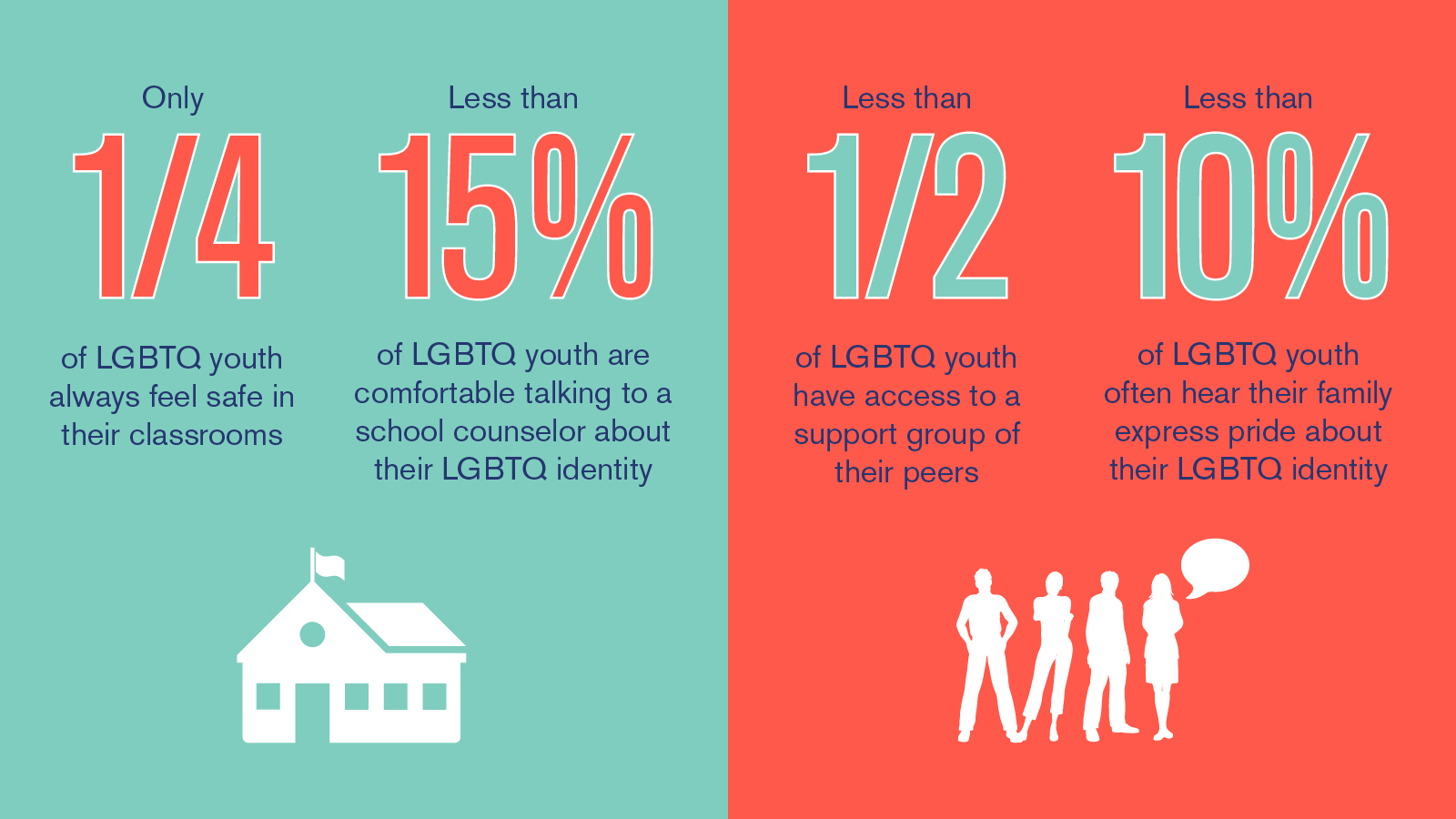
We covered best practices for legal and ethical protections of our LGBTQ students that I was not very aware of. With this knowledge, I feel I am better able to advocate for things such as single user restrooms (AB 1732), their ability to change their name on unofficial records (AB 1266), and for policies around anti-bullying to be inclusive to LGBTQ students (Seth’s Law: AB 9). In addition, we discussed the importance of counselors working with students and being visible and vocal allies, especially since data has shown that from 12,000 LGBTQ youth surveyed, only 15% felt comfortable talking to their counselors about their identity.


Thursday, October 11, 2018

Calling Upon the Warrior Spirit to Heal Historical Trauma Conference and Ceremony

I attended the Calling Upon the Warrior Spirit to Heal Historical Trauma Conference and Ceremony. This conference was held October 8ththrough 10th, although I only attended the 8thand first half of the 9th. The Viejas Band Tribal Government of the Kumeyaay Native American tribe hosted the event at the Viejas Resort and Casino in Alpine California. In addition to them the conference was sponsored by the Barona Band of Mission Indians, Sycuan Band of the Kumeyaay Nation, Morongo band of Mission Indians, IPAI, Pala band of Mission Indians, Rincon Band of Luiseño Indians and San Manuel Band of Mission Indians. Across the three days there was a great number of presenters and speakers.
As a member of the Native American and Indigenous Scholars Collaborative Project (NAISCP) we choose to attend this conference to seek additional knowledge and support in how to best address the concerns of historical trauma that we see manifesting with our native students. The conference and ceremony aimed to focus on the Indigenous perspective on how to holistically address historical trauma and develop specific goals and plans on how to do so.
The particular counseling intervention that was guiding the conference was addressing historical trauma through storytelling. Although there was not a specific session that told participants storytelling is counseling technique to use, instead it was the tool that each presenter used to demonstrate the power of storytelling in healing. For example, there was a panel of both elders and youth who told short versions of their own personal stories that included both the effects of trauma on their lives but also their inner resilience and stories of how they overcame their personal trials and tribulations. Many of the speakers did something of the same, telling their story while also exploring how historical trauma influences the community overall.
The technique of storytelling can be used with any population of students; however, it is particularly powerful for those who have suffered great trauma. As part of the NAISCP we use this counseling technique with both ourselves and our students. It can be adjusted and implemented with almost any age group. For adults, more depth and detail and therefore time can be used to truly explore a person’s story and allow them to share all the influential parts of their journey. With children the tool can be adapted to be more prompting and interactive but still with the underlying purpose of allowing the students to tell their stories. We use this technique with ourselves and students over the course of entire year, always allowing time for adding editing and reinterpretation. 
Storytelling as a technique can absolutely be replicated in any setting. All that is required is the time and attention to listen and hear a person’s story and insights on their life and allow someone to share. Although this technique may not be specifically evidence-based we have found incredible success and impact with in our groups as part of NAISCP, and also in this conference. With Native American students recognizing that their unique stories greatly impact their ability to succeed in school allows us to work with them to recognize their resilience and strengths in the face of current and historical trauma.
The use of storytelling can be linked to the well-known technique of Narrative Counseling in schools in which a counselor also explores the narrative a student shares and in addition works with them to explore strengths heard in the narratives. This is similar to what we explored in this conference of finding the resilience in the stories of historical trauma.

Marisa Leone

Thursday, September 27, 2018

If My Parents Only Knew


I had the opportunity to attend an event called If My Parents Only Knew at Valhalla High School on September 26th. This is the second event that Valhalla has had although it is modeled after one that is one in Poway Unified that has been put on for the last seven years. The event was three hours long in total and both students and families were invited to attend. The first hour was a resource fair. The program partnered with San Diego Youth Services, Mending Matters, County of SD Health and Human Services, Eric Paredes Save a Life Foundation, Sandy Hook Promise, NAMI, Rady Children’s Hospital, McGrath Family YMCA, and AFSP. Each of these community resources had a table set up with materials to hand out to families and handouts and other materials that they could take home with them. Following the resource fair, there were ten breakout sessions that families could choose from. There was enough time for each family to choose two for the evening. The breakout sessions included Pressure of Social Media, Making the Grade (pressure to get good grades), Suicide Prevention, Talk with Your Ears, Managing and Balancing Expectations, Trends in Drug Use, #KnowNoStigma, A Mother’s Story: Navigating Through a Child’s Mental Health Challenge, How I Deal with Bullying/Harassment, and Healthy Relationships. It was amazing that each individual session had a panel of students who have been directly impacted by the topic and were willing to offer their perspective and shed light to the adults in the room about what their experience has been like.
            The first session I attended was Suicide Prevention, which was presented by Chuck Price. Mr. Price is a Chaplain of the Coronado Police Department and is part of the crisis negotiating team. It was interesting and helpful for me to be able to listen to how he talked to parents about how they can talk to their students and to hear the questions that parents had. It was also my first opportunity to hear directly from the students what the experience was like for them and what they felt like they most needed for support. Both the students and Mr. Price discussed the importance of asking the students directly if they have had thoughts of suicide. He also briefly went over how to talk to someone “down off the ledge” both literally and figuratively. He said we should first try and build rapport and gain the persons trust and then look for hooks and triggers (mostly resiliency factors) to try and get to the hope phase.  One of the students described her experience of suicide ideation as drowning in a pool and trying to splash and scream but feeling so far underwater that they can’t. It is crucial for us as school counselors and teachers to be consistently checking in with students. The signs of self-harm and suicide ideation can manifest in many different ways and often they are difficult to recognize. The student described that the first time someone asked her if she was having suicidal thoughts she felt relieved and felt like there was someone who cared and who could help to pull her out of the water.
            A really powerful segment of the resource fair was a huge poster titled If My Student Only Knew (pictured below) this provided a space for parents and family members to leave post-it messages for their students letting them know how they felt about them. Some of the most powerful ones I read were centered around how badly parents wanted to be a support system for their student and wished they knew how to be.
            Overall, I was extremely impressed by this event. It is held twice a year so that students and families have the opportunity to attend a multitude of sessions during their four years at the school. The turnout and the level of participation in the breakout studies impressed me as well. While the techniques that were described here were intended for high school age students, they would also be appropriate for all ages. These techniques are appropriate for all grades, genders, and the information should be available to all students as it is highly likely that they or someone in their life will have some sort of experience with suicide ideation.


Wednesday, January 17, 2018

Introduction to Restorative Justice Training and Using Circles Effectively

I had the opportunity to attend a two day training called “Introduction to Restorative Justice Training and Using Circles Effectively”. It was through the San Diego County Office of Education facilitated by Anthony Cejas, with materials provided by the International Institute for Restorative Practices. The training not only provided numerous quality resources, but also an experience that benefitted my practice in many ways.

Experiential Training
The training was facilitated in a circle (rather than the typical desks or tables lined up to watch a presenter) to demonstrate how to use circles effectively with approximately 30-40 educators. Many attendees expressed anxiety and fear when they realized this was unlike the typical professional development trainings they were used to. However, facilitating the training in such a way was essential to understand how to practice this in our own schools and environments. Experiencing it was more beneficial than simply reading about it or listening to someone present: it allowed us to form relationships with each other, share knowledge and ideas, and fully engage in the training. Restorative practice is a hot topic in the field of education and it can often become misconstrued, thus, I say this to emphasize the importance of experiencing it.

Supporting Frameworks
In order to understand restorative practices, the training provided supporting frameworks: 

Social Discipline Window
The social discipline window can be applied to many different settings. For example, parents, teachers, administrators, managers, social workers, etc. This model states that relying on punishment as a social regulator is less effective because it shames and stigmatizes those who make mistakes. However, the restorative approach re-integrates people back into the community and reduces the likelihood that they will reoffend.

Restorative Justice Typology


There are three primary stakeholders (victims, offenders, and communities of care) that must participate in the restorative process in order to meet the emotional needs of all parties. The degree of their involvement is respective to the degree of restoration.


Restorative Practices Continuum
The restorative practices continuum shows that there is a range of how situations can be handled: informal to formal methods. Affective statements and questions communicate people’s feelings and cause people to reflect on how their behavior has affected others. Impromptu conferences are more formal but don’t require the same preparation as formal conferences.

Nine Affects
The nine affects describe the importance of open communication of emotions. We want to maximize positive affect, minimize negative affect, but express all affect.

** see Resources section at bottom for examples


Compass of Shame
This framework takes a deeper look into shame. People do not have to do something wrong to feel shame, but just has to experience something that interrupts positive affect.


Fair Process
The fair process has three principles:
1. Engagement: Involving individuals in decisions that affect them by listening to their views and taking their opinions into account
2. Explanation: Explaining the reasoning behind the decision
3. Expectation clarity: Ensuring that everyone involved understands the decision and what is expected of them moving forward

Basic Restorative Processes

Restorative Conferences
A restorative conference is voluntary, thus no one is forced to attend. This is a structured meeting between all parties involved. It provides a space for open expression of emotions, understandings, apologies, and restoration. 

Circles
Circles have a wider variety of purpose: conflict resolution, healing, support, decision making, information exchange, and relationship development. When facilitated properly, they can remove hierarchies and therefore power dynamics that may usually be present in certain environments. Circles may also use different formats: sequential, non-sequential, restorative justice, or a fish bowl. In some cases, using a talking piece is appropriate.

**see Resources section at bottom for examples

Room for Growth: Missing Pieces in Restorative Practices?
The following handout discusses the “racial gap” in referrals and suspensions.

While the statistics are looking a bit more positive, this fails to address the root of the issue. Restorative practices does offer ways to transform student-teacher relationships and equity in school discipline, however this cannot be done if the root issue is never addressed. In the given example, the gap narrowed, but it still exists: why? Despite the decrease, African American and Latino/a students are still referred 3.7x as much as white/Asian students in classrooms with high levels of restorative practice implementation. This shows that restorative practices alone is not working to achieve socially just school environments. So what should be done to achieve such a thing? A complex issue requires a complex solution, however, a good starting point is to confront one’s own biases. As educators, it’s important to pay attention to how we talk to (verbally and non-verbally), deal with, and form relationships with students.

Takeaways

  • Healthy relationships are key (student-teacher, counselor-student, parent, counselor, teacher-teacher, student-admin, teacher-admin, etc.).
  • Restorative practices can only be effective when ALL are on the same page and delivering the same message.
  • At the same time, how restorative practices is implemented and used will look different at different schools. (i.e. some may favor certain supporting frameworks over others)
  • Change is slow and requires a lot of work: find allies in your schools and start small!


Resources


Heidi van Mastrigt 

SDSU School Counseling Graduate Student